Time in the Studio

I spent two evenings earlier this week recording background music for television, so my thoughts have turned to the wonderful and sometimes unpredictable world of the studio. On Monday, several of us from the Toronto Consort spent a couple of hours playing our way through some 16th-century dance tunes to accompany the on-screen political machinations in the next season of The Borgias; the following night I went in to improvise on my Norwegian flutes some music for a wedding party scene in the upcoming series on The Vikings.

Toronto Consort played a substantial amount of the music for The Tudors and some for The Borgias, and it’s always been a great pleasure to be involved in these shows. As you can gather from their quality, these Irish-Canadian co-productions are managed at the highest professional level at every step of the way, so nothing falls between the cracks in the creative, administrative or recording processes. The people involved are great, everything is beautifully organized, there are grapes, vegetables and hummous if you get hungry…and it’s the closest I’m ever going to get to Jeremy Irons.

If you like, check here for a taste of the Tudors:

http://youtu.be/KtV8GaLE7sY

Not all such recording gigs are so incident-free. One of my most vivid recording session memories concerns the two-foot-square riser I had to stand on during the session for Bach’s Fourth Brandenburg Concerto with Tafelmusik. In the months prior to the recording dates the producer Wolf Ericson, a celebrated gentleman with a long and impressive history of early music recording dating back to the Philips-Seon days, had apparently been expressing his concern that ‘the second flute is very small.’

There was some understandable confusion over this in the orchestra offices. Both Marion Verbruggen and I were going to use alto recorders, both of those recorders would be the same size, so what exactly was the problem? Turns out that Mr. Ericson remembered a significant height difference between Marion and I – she’s perhaps 5’10, I’m 5’3 on a tall day – and he wanted to use only a single microphone on the pair of us. Better for the blend, better for the balance. The enterprising solution his team came up with was to build a small riser, which made me as tall as Marion and placed me at the same distance from the mic. It was mostly very entertaining, viewing the world from a dizzying height for a couple of hours! The only drawback was that Marion and I had planned to turn away from the mic for the ‘echo’ sections of the slow movement, and this proved a greater challenge while standing in restricted square footage. Fortunately for me, the riser had a kickrail that warned me of any impending fall.

That Brandenburg recording was originally released on Sony, and is now available again through Tafelmusik Media:

http://www.tafelmusik.org/watch-and-listen/recordings/brandenburg-concertos

In the case of remote recording sessions made in a location other than a studio, any musician you talk to will likely have a story or two about The Session From Hell. Recording sessions are usually long, stressful, arduous after a while, and they can be expensive; remote recording is often chosen because renting the recording space isn’t as expensive as renting a studio. But because recording dates are usually booked months in advance, you can’t be sure that the weather will cooperate when the day arrives, and if the heavens open in torrential rain or a thunderstorm, that’s noise you can’t avoid. If the power fails, bad weather or not, you’re probably not doing any more recording. If you’re recording in the summer during a heat wave, you know that the sound of air conditioning is not a musical one. In this situation, I can offer only two bits of advice: drink water throughout the session, and dress appropriately or be prepared to take off your clothing. Heat stroke sucks.

Mother Nature sometimes takes a more mischevious approach with the incessant cawing of a crow, sparrows singing on the roof, or a cicada buzzing rapturously but invisibly from the nearest tree. (You’d buzz rapturously too if you were awake and outside for the first time in seventeen years.) In these situations all you can do is ask a friend to come over and run interference by throwing rocks to drive the birds away, over and over again. In the case of the cicada, I’m sorry, there’s no remedy. All is not lost, though, because your engineer probably has a magical program that can isolate and identify a particular sound frequency and then remove it during the editing process. Before they invented that, you had birds on your recording, or you had no recording. I like the sound of faint birdsong in the background, but not everyone shares this feeling.

Human interference is another story. I remember showing up for a Consort recording session at a western Toronto church to see a crew of four City workers and a small backhoe about ten yards away from the church’s front door. That was noisy, and the ground vibrated from the digging. On another occasion, the sewer had backed up and an even larger crew from the City was busily ripping a hole in the pavement with a jackhammer (well, half of them dug, the other half watched). The noise was unbelievable. A colleague at an Ensemble Polaris session once had the unenviable task of calling the City to broker a deal for the tree-pruning/shredding crew to move to a different block. Recording work can also grind to a halt because of leaf- and snow-blowers and lawnmowers, or the unsympathetic neighbours who operate them. But such is life – they want to mow their lawn and very likely have a good reason for why it has to be NOW. And the world shouldn’t have to stop for a recording session. If you want that much control, you rent a studio, where the problems of unwanted sound are easily resolved, most of the time.

On rare occasions in the Glenn Gould Studio, which is a fantastic space for both recording and performing, you can hear a very faint humming in the ambient sound. It’s so faint it’s hardly audible to the ear, but a microphone can certainly pick it up. Among the sound engineers working there, who can find ways to get around the sound, the question prevails: is it Glenn Gould, humming from the other side?
Happy New Year!

The Year of the Snake has arrived – Happy Lunar New Year!

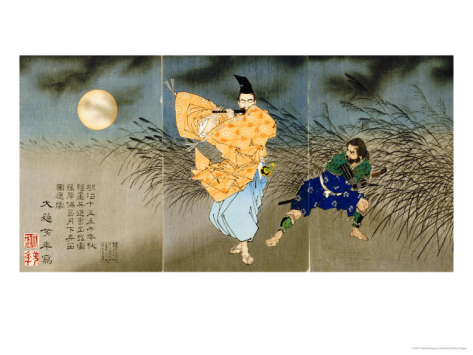
People born in Snake years are said to be artistic, stylish and complex. Here, for your viewing pleasure, are two images of artistic, stylish and possibly complex flute players from China.

chinese tryptich

Chinese flute player

A summer in the joint(s)

I spent the summers following my first two years of university playing concerts in various community settings across southwestern Ontario, with an ensemble called Different Drummers (why does that name sound so lame now?). The group operated under the auspices of the Opportunities for Youth program, a student summer employment initiative of the provincial government.

We were a motley bunch of musicians, drawn from various points on a wide-ranging web, and our core instrumentation was violin, viola, cello, guitar, flute/recorder and piano. Our eclectic programming was an attempt to realize the noble but impossible goal of playing ‘something for everyone.’ We varied our shows but a typical one might include some Bach keyboard music, a movement of a Mozart string trio, a Scott Joplin rag, some Farnaby and Byrd, Monti’s Czardas, a couple of folk or folk-pop songs, and something from the contemporary ‘art music’ world. We did a lot of arranging to suit pieces for our instrumentation, occasionally with hilarious results. (Yes, the audiences thought so too.) Our extraordinary manager/administrator/chief financial officer/roadie was a guy named Greg Dovlet, and our home base between run-outs was a mid-city junior school not in summer use.

DDA&T&A

For young musicians training in a typical classical music school, the concepts of what audiences are like and how a performer should behave can be very skewed. You expect everyone to sit quietly and politely, for example, and/or you expect that a concert will be played in the order printed in the program; but neither of these expectations carry much weight in the worlds of Other Music Lovers. If you have the opportunity to play shows for audiences very different from the ones that frequent concert halls, you’re given a tremendous chance to remedy that skewing and to learn how to play for the rest of the world. That’s the opportunity we had for those summers, and it was a huge gift.

During the first summer we played at kids’ summer camps, hospitals, hospices, long-term care facilities, mental health centres, senior citizens’ residences and community centres, and a couple of jails. Based on those jail experiences, Greg’s proposal for the following year focused our activity on correctional institutions. Though we still performed for a few audiences of seniors or children who were free to leave when the show was over, we spent that second summer playing at detention centres, halfway houses, and minimum- and medium-security prisons around southern Ontario.

Don Jail

We would usually play two shows in one larger venue, or two or three different places in one day. We played at Toronto’s Don Jail several times, in the chapel in the old section of the building, and at various other places, the names of which we’d only heard of in the news. In Penetanguishene’s facility ‘for the criminally insane’ (as it was called at the time), we played for an eerily dulled bunch of people who clapped and smiled but were completely silent – and then later that day we played at the non-correctional psychiatric hospital where we got exactly the opposite response. There the audience got up and danced, sang along, wandered, or came up and had a chat while we were playing (and playing the flute makes it a bit difficult to respond ). The Orange Blossom Special was particularly special that day, as one audience member leaped to her feet and danced in a frenzy of delight that impressed her caregivers, and that most of us ‘sane’ people would never think of showing.

One day we travelled to a medium-sized city where the jail warden was a total jerk, the kind of guy I thought only existed on TV crime dramas. His staff were only slightly less obnoxious, and the atmosphere in the place was palpably angry. I couldn’t imagine being in that place for months on end without learning to hate the world even more than you did when you arrived. We played in the central area of the jail, next to the huge wrought iron staircase and amongst the cells, but the cell doors faced away from us and so the inmates couldn’t see us while we played. This was the only instance all summer where we couldn’t see our audience, which was very disturbing, and not surprisingly there was lots more heckling than usual in that show. Later that day, we drove half an hour southwest and played in the courtyard of a smaller jail where the warden and the staff treated the inmates as they’d like to be treated themselves. The atmosphere there was diametrically opposed to what we’d experienced in the morning. That was a very educational day.

Yes, there was always heckling; but the hecklers were relatively few, and there were also attentive non-hecklers who listened, watched, clapped, asked for more, asked questions, and sometimes even yelled at a heckler to ‘shut the #$@% up!’ From a performer’s standpoint it was a really important learning situation – we just kept playing despite ridicule, insults and sexist remarks being yelled at us. One of my colleagues was a beautiful Rubenesque blonde and therefore a particular target for the latter kind of attention, and I don’t know how she managed. We’d all be targeted at one time or another. As for the music, some inmates thought Mozart sucked, some people hated songs by Gordon Lighfoot, but the big surprise for me was that very few people in the prison population took offense at Byrd or Farnaby. Definitely not what I’d expected.

When friends heard where we were playing that summer, they’d ask, ‘So, what’s it like to play for a captive audience (har har har)?,’ which is what we got asked at pretty much every institution too… But when they asked what jail was like – as if I really knew at all – my answer was usually, “Best to stay out of it.” In some prisons you got the impression that the people doing time were being encouraged to change their life trajectory, to imagine other possibilities for themselves, and treated with dignity despite having made some extremely bad choices in the past. We’d all want this if any of us found ourselves in their situation. In other places the atmosphere was so thick with the psychological grime of the ‘us vs. them’ game, you’d want to take a shower when you left. I remember wondering what the maximum-security places were like, but it’s probably for the best that I never found out. Of course our experiences were minimal and very restricted, and we only understood a tiny part of the complex whole, but the project was one none of us will forget. It was a disturbing, confusing, eye-opening, fascinating and rewarding summer.

There’s been considerable discussion in the Canadian press lately on the treatment of prisoners in our correctional system. One of these items is a commentary in the Globe and Mail by David Clayton-Thomas, best known as the lead singer of Blood, Sweat and Tears. Here’s the link:

http://www.theglobeandmail.com/commentary/ashley-smith-could-have-been-me/article7636727/

I’d like to pay a particular tribute here to the late Greg Dovlet, who died unexpectedly a couple of years ago. Thanks for everything, Greg, and for all that you were.

A little gem of a piece

In concerts of 17th-century German Christmas music with the Toronto Consort last month, I had the chance to revisit a great little instrumental piece by Johann Hermann Schein. It was a four-part Intrada with the original scoring for ‘Zinck, Viglin, Flödt, Basso.’ To translate, that would be cornetto, violin, flute and bass, though the last word refers to the bass part rather than to any specific bass instrument. A curious and wonderful grouping. Speaking of curious, here’s an image of the composer:

Image

Born in 1586, Schein moved to Dresden with his family at the age of seven after the death of his father. He received his musical training in Dresden, Pforta and Leipzig, and worked in Weimar before landing the job of cantor at Leipzig’s Thomasschule in 1615. Schein worked there until his death in 1630, performing the same job to which J.S. Bach would be appointed one hundred and eight years later. Schein’s compositions are almost all vocal works, both sacred and secular; his one collection of instrumental music is the Banchetto Musicale (1617), where this little Intrada can be found (item 21).

It’s a really great little piece. Out on the web there are several performances of it on more homogeneous-sounding string or wind consort, but it’s at its best with the wonderful mix of colours specifically requested by the composer. In December my colleagues were cornetto player Kiri Tollaksen, violinist Christopher Verrette, and Dominic Teresi played the bass line on the dulcian.* Just under three minutes of genuine delight.

You can find the score and parts here:

http://imslp.org/wiki/Intrada_%C3%A0_4_%28Schein,_Johann_Hermann%29

* a forerunner to the bassoon

Performance Tip #1

Gotta love Quantz. Flute teacher to Frederick the Great, but not too busy to write an enormous tome covering virtually every aspect of musicianship in general, and flute playing in particular. Ever the practical guy, and no detail is too small…

“He [the performing flutist] must hold the flute so that the wind may escape unhindered. He must be careful not to blow at some time into the clothes of those who stand very close upon his right side, since this makes the tone weak and muffled.”

J.J. Quantz: On Playing the Flute. Berlin, 1752. Chapter XVI:10

(English translation by Edward R. Reilly, pub. Faber & Faber 1966/1976/1985/2001)

220px-Johann_Joachim_Quantz

Arthur the Kunstkopf

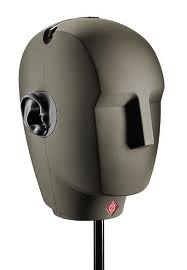
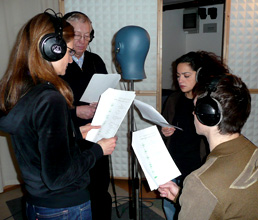
I was in my second year of undergrad university when my teacher Hugh Orr asked me if I’d like to participate in a recording session for CBC Radio. The plan was to record music for recorder trio using the Kunstkopf (artificial head) recording technique, which was cutting-edge technology at the time. Also known as ‘dummy head recording,’ and very simplistically described here, the sound is captured with microphones placed in the ears of a plastic head. The result is a surround-sound effect for the listener – you hear the performance as though you were sitting amongst the performers. Headphones are useful for optimum effect, but not mandatory.

images

John Reeves, the producer in charge, was a groundbreaker in recording technology at the CBC and was the first to bring the Kunstkopf technique from Germany to North America. The other players were Hugh and Susan Prior (now Carduelis), and we recorded the session in the soundproofed basement studio at Hugh’s home. The dummy head – Arthur, I think he was called – was propped on a mic stand and placed right amongst us, like a mute fourth member of a quartet. It was a bit odd, playing for a plastic human head stuck on a pole two feet away, but strange things happen in the recording world…Here’s a shot from a different session, to give you an idea.

kunstkopf

John Reeves had been experimenting with various chamber music groupings and it was pretty great that he wanted to include some pre-Baroque fantasias. I think we played John Jenkins and Orlando Gibbons. It’s wonderful music, especially the Gibbons: cerebral but not overly so, and with supple imitative lines. A bit like a pleasant conversation with friends, about something more than the weather (but not politics or religion). I had such a great time playing that session, and it was fun to hear the intriguing results on the radio broadcast sometime later. As is often the case, I wish now that I’d been more aware of the technology and of John Reeves’s work than I was at the time, but it was a real privilege to have had that experience. Thanks to Hugh Orr for this, and so much else.

Starting out

When I was eight I lived in the area of southwest London known as Barnes, and I went to Westfields County Primary School. Westfields was one of those old rectangular buildings with a central assembly hall/gym surrounded by classrooms along the walls, offices at the front end and the student cloakroom at the rear. The loo stalls were outside, so answering the call of nature between late October and April – most of the school year – usually necessitated a chilly trip. (That’s all been knocked down and replaced now, but the old back gate is still there.)

Image

In the autumn of that year my classroom teacher Mr. Green announced that he would be teaching group recorder lessons to anyone who wanted to learn, every Tuesday after school. He gave us a letter outlining the registration routine, lesson schedule, and the cost. Anyone wanting their child to participate was asked to sign the form and send it back, along with four shillings and ten pence or whatever it was – 2s.6p. for the recorder and the remainder for the book.

When I went back to school the next day with the signed form and money in hand, I was happy about it but I thought I was doing it at my mum’s insistence rather than mine. Years later I heard her version of the story, which was that I’d announced the offer of lessons, asked ‘What’s a recorder?’ and that when I understood it was the flute thing my Uncle Bill played, I got very excited and wanted to be signed up right away.

I don’t recall the part about Uncle Bill at all, but it doesn’t surprise me that he might have been an inspiration to me. Married to my mother’s first sister, he was one of those men whom everyone liked – cheerful, good-natured, sociable, intelligent, funny. It was one of life’s cruelties that he died of a brain tumour in his late thirties, leaving my Aunt with two small children and her heart bashed in.

Uncle Bill played the recorder at the family singalongs around my Aunt’s piano. My Aunt played piano extremely well, inventing accompaniments to show tunes, folk songs and the occasional hymn. Everyone loved to sing and did so enthusiastically, but I didn’t because I’d been asked not to. Allegedly I took after my father’s ‘tin-eared’ side of the family because I couldn’t carry a tune. [My father came from a family full of atheletes, and just to be clear, I don’t take after them either.] It was no fun not joining in at the family piano-swarmings, so the possibility of playing what Uncle Bill did must have seemed like a great idea to me. Off I went to recorder class.

I liked playing a lot, and I didn’t have to be reminded to practise. My playlist of favourite tunes included Down in Demerara, March from Judas Maccabeus and All Things Bright and Beautiful, and like most kids I made up my own tunes as well. I still have a couple of those first attempts at ‘composing’ and they’re pretty hilarious, but I’ve often wondered why that particular creative desire went underground for so many years afterward. Years later, while teaching basic recorder for music education students at university, I regularly asked them to think back to their earliest musical experiences and asked, did they made up their own songs or tunes? Do they, still? (Most answered no.) When did they stop doing that, and why?

Very interesting, the looks on their faces as they wondered about all that.

Anyway, after a few weeks passed, my mother must have been surprised to get another letter from Mr. Green, asking that I be allowed to join the class which had been already playing for a year. He thought I’d catch up to them quickly and was worried I’d get bored if I stayed with the other beginners. So I switched group and, apart from having to deal with a few snotty comments from the second-years, it was just fine. That Christmas I joined in with my recorder at the family singalong, and it was just the best!

Image

My friend Pauline remembers that Mr. Green drove around in a Mini, often with a cello in the back seat. Sadly I don’t recall that, but I’m very glad that Mr. Green was such a music enthusiast, and so generous of spirit. He taught those classes without charging anything for his time. What a gift, and I’ll always remember him for it.

Side note for anyone who’s been designated as ‘tin-eared’:

Being truly ‘tone deaf’ is pretty rare, and most people who think they can’t carry a tune can learn to sing. We’re usually quite unaware of our voices, and when singing it’s hard to hear your own sound as it rattles around in your head. For some there’s also an experience of fear or embarrassment connected to our early attempts to sing in the company of others, and the memory of it can stick like grime. For me, some voice lessons in Basel and the generous encouragement from colleagues were a big help in banishing some gremlins of old.

I’m not about to sing any solos in public, anywhere, but I’ve managed to sing in small groupings at a few concerts and once I even sang two solo lines in a program of music from medieval convents, which on top of everything else was recorded for the radio. I was so nervous I almost passed out, but hearing myself when the show was broadcast a few weeks later was an amazing little moment. I was no Hildegard of Bingen, but I didn’t suck. Who knew?

Ignazio Sieber’s Recorder Sonatas

While excavating a section of my sheet music filing cabinet the other day, I came across the sonatas of Ignazio Sieber (c.1680-c.1757). His six sonatas for alto recorder and basso continuo were published, probably in 1722, together with an equal number by Johann Ernest Galliard. Since Galliard’s name appears first on the frontispiece, I dutifully filed them under ‘G.’ No wonder I lost track of them for a while.

Sieber certainly isn’t a household name but his sonatas for alto recorder and basso continuo are worth a look. We have very little biographical information on him, but see from the the publication’s title page that he was living in Rome (‘demeurant à Rome’) around the time his sonatas appeared in print. Not surprisingly, his writing for the recorder reflects the typical early 18th-century Italian taste for not extending higher than an E’’ and for hovering lower than that most of the time. Sieber hangs around in the high register more than Bononcini, Bigaglia, or Bellinzani for example, but he still doesn’t ask a player to spend a long time up where the air is thin. Italian recorders from the time have a beefy low register and a weedier high register than their German counterparts, for example, which would likely have affected how musicians composed for the instrument.

Certainly more interesting and demanding than the Galliard sonatas that precede them, Sieber’s sonatas are in C major (two), a minor, and g minor (three!), all key choices which echo Händel’s opus 1 recorder sonatas (also thought to have been written in Italy). The music is well written for the instrument, lies comfortably, it’s reasonably challenging, and he has a witty way with passagework. The slow movements include some examples of notated ornamentation but there’s much additional scope for a player to experiment with phrasing, articulation, pacing, and further elaboration. The continuo parts similarly offer a lot of opportunity for creative experimentation.

As with many lesser-known Baroque sonatas, the writing isn’t dazzling or brilliant throughout but then, let’s admit it, neither is Vivaldi’s. Plus, Sieber’s music provides considerable opportunity to add your own thoughtful two-cents-worth well beyond a few ornaments. You can team up with him to create something extra, an interpretation which you might call even more ‘your own’ than your versions of Telemann or Vivaldi. I’ve heard similarly unfamiliar pieces dismissed as not worth working on, but I wonder if such judgement is passed either because the recorder part has too few fast sixteenth note passages, and/or because the player lacks imagination. As we all know the components of a good piece and a good performance are many and varied; and if you do really want more fast arpeggios, you can almost always add some…

Plus, if you’re looking to create a program of music from a certain city or region, in a certain style or by a particular group of composers, having repertoire like this is a real boon.

A link to the facsimile at IMSLP (don’t be fooled by the initial title – Sieber’s sonatas are here!):

http://imslp.org/wiki/6_Flute_Sonatas,_Op.1_%28Galliard,_Johann_Ernst%29

Fun Times with The Friendly Giant

Like many Canadians born in the second half of the twentieth century, I spent a small but significant part of my childhood watching CBC-TV’s The Friendly Giant. As a preschooler, every weekday morning I was transfixed for fifteen minutes as Friendly invited us all to join him in his castle, chatted to his puppet buddies Rusty and Jerome, and read a book to us all. These days it’s difficult to imagine that any kid’s show could ever be focused around the reading of books. Reading a story with your friends – what a concept! Created by Wisconsin-born Bob Homme, who played Friendly, the show played in Canada for over twenty-five years and was marketed in parts of the US during the latter part of its run.

The other regular occurrence on The Friendly Giant was Music Day, when Friendly would play recorder trios with Patty and Polly Piper, two other puppet friends of indeterminate species (raccoons, I thought, or maybe cats).  Once a week, with tiny toy recorders of various sizes, they tootled, bobbed and weaved to music from the courts of Henry VIII or Charles II, dance tunes published in the 1500s, and/or something penned by J.S. Bach. Go figure. You couldn’t get away with that on TV these days even if you paid for the privilege.

Pre-school days ended and I abandoned Friendly for Yogi the Bear, Top of the Pops, Batman and the Addams Family (Carolyn Jones, may you rest in peace, you are still my hero). Then came high school, university, study overseas, and the return home to try making a living as a musician. I’d been doing that for a year or two when one day I got a call asking if I could come down to the CBC studios on Jarvis Street to play a session for an episode of [gasp] The Friendly Giant. The other people on the gig were my former teacher Hugh Orr, who had played on the show for years, and Bob Homme of course. I was over the moon – pretty close to where the cow flew in the show’s closing credits.

At this time they were still recording all the show’s music in the TV studios, with the mics and music stands set up three feet away from where the show was shot. So when I walked into the studio and saw the set with the ‘real live’ Jerome the Giraffe puppet lying inert on the floor, the distant past collided with the present in a good way and I pretty much went into an altered state. There right in front of me were the castle walls, the window through which Jerome visited, the shoe bag where Rusty the Rooster lived, and the miniature living room into which viewers were invited, with its fireplace, rocker and the big armchair ‘for two of you to curl up in’…and there was Friendly himself.  I remember making some Obvious Gig Novice comments such as ‘oh wow, look, those little chairs are so CUTE!’ and, ‘OMG was Jerome always orange and blue?’ but everyone seemed understanding of this, having had many other star-struck visitors on the set before me.  Introductions were made, the session’s music was discussed, and then Bob, Hugh and I sat down and ran through a few Praetorius dances a couple of times while the tape rolled. (Jerome lay on the floor without moving.) And that was that. Luckily for me I was part of several more shows over the next few years. As time passed Patty and Polly expanded their musical skills, sometimes played different types of music on other instruments, and I think they underwent name and character changes at some point, but early music continued in the repertoire loop until the show ended. And that was pretty cool.

Bob Homme was such a lovely man, unpretentious, laid back and kind, and he was an enthusiastic recorder player – he could always hold his own in consort music, and it was he who played the show’s theme song, Early One Morning. He was a clarinet player who grew up playing jazz, and a consummate professional with a real devotion to his work and a genuine respect for the intelligence of children. No dumbing down or talking two octaves higher for him.

Playing for that show was one of the most pleasant and easy-going yet totally professional gigs I’ve ever had the good fortune to be involved in. Not surprisingly it’s also proven to be one the most meaningful career credits in my bio for people who happen to read it. Popular culture in general, and a direct connection to happy childhood memories in particular, trumps just about everything else from CDs on fancy labels to concerts in fancy places. Food for much thought there. The music wasn’t flashy, the technology wasn’t much, the audience was very young, but the impact of Bob Homme’s vision and inventiveness was far-reaching and powerful. He received the Order of Canada in 1998, two years before his death, and in 2005 the Audio-Visual Preservation Trust of Canada designated the show as a Masterwork.

After the show ended a number of its puppets, props and costumes were put on display at the small museum in the CBC building down on Toronto’s Front Street. It was always fun to catch a glimpse of them whenever I was in the building. In 2007 most of the Friendly memorabilia was removed from the museum and a farewell afternoon reception was organized so people could drop by for a final look. Someone at the CBC called to ask if some recorder duets could be played throughout the event, and it was very touching to provide those with Colin Savage as people wandered in and out. There were a lot of visitors that day.

Many of the shows are there for the viewing on YouTube. Here’s one: http://www.youtube.com/watch?v=dVsIjzkQ7ic

If you’re interested, check out Grant D. Fairley’s biography of Bob Homme, available through most book vendors.

Image